Puzzle Panic is Limit Break’s anime-styled match-3, soft-launched on iOS in Australia, New Zealand, and Singapore. Each level pairs a puzzle board with a scene above it: clearing obstacles advances a short scenario, like putting out a kitchen fire, scoring in the gym, training in a dojo, winning a dance battle, hunting treasure in a temple, and so on.
| Kitchen scenario | In-game: dojo scene + board |
|---|---|
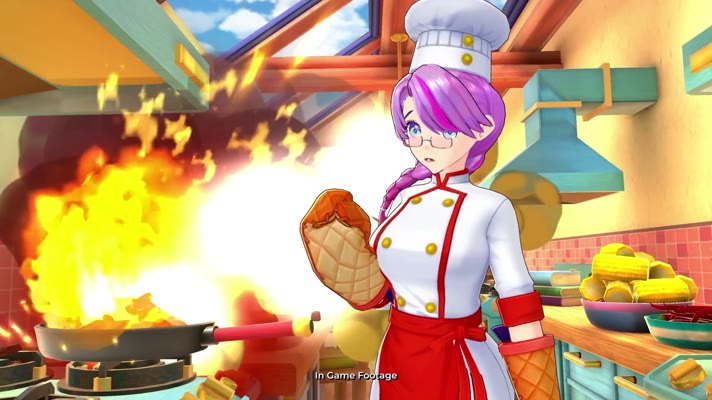 |
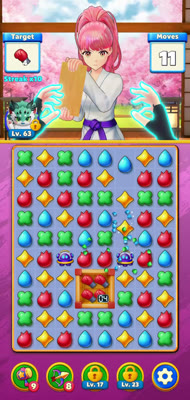 |
Since joining Limit Break Japan in August 2024, I have worked as a Unity generalist on designer-facing tools, live-ops content flow, UI, and boss puzzle presentation.
Puzzle authoring tools
Rebuilt the in-house Unity puzzle editor into a more accessible production tool so designers could prototype ideas quickly and ship new boards without waiting on engineering. It became the workflow they used to create content.
Batch content pipeline
Took over and extended tools that apply bulk edits across large puzzle libraries, so live-ops variants did not have to be hand-authored one file at a time.
Live-ops packs and gating
Automated assembly of server-ready content packs from designer parameters, and implemented client access rules so a time-boxed live-ops mode stayed in sync when new story content dropped. I also added a local playtest path so QA and other developers could run the loop while server support for that path was still landing.
Fail menu UI
Took oversized, atlas-unfriendly fail-menu art, sliced it into reusable pieces, and wired it to a custom UGUI setup with canvas isolation for interactable elements. Added tweened presentation that shipped.
Boss board events
Integrated boss retaliations that mutate the board mid-level, such as spawning or moving obstacles, resetting clear progress, and similar effects. Refactored the system so new bosses could be wired with far less duplicate code, and timed VFX and animation so players see the effect before the board changes.
Shared cut-in effect
Worked with VFX and technical art on a reusable anime-style cut-in (a close-up panel before a big boss move). Built tooling so unique art plugs into one shared, optimized asset instead of a one-off setup per boss.
I also contributed new puzzle piece types, puzzle-logic and scenario-view animation fixes, and performance work across the client.
Same approach as my other live mobile work: give designers leverage, then ship the player-facing systems those tools feed.